How do you create one of the top selling cars in the UK during one of the most competitive periods for the automotive industry? ”Keep listening to customers and improving the areas they ask for” is what Nissan claims has made the Qashqai a sales phenomenon for the company.
We’ve driven the car on home turf to find out if it’s still keeping ahead of ever-tightening competition.
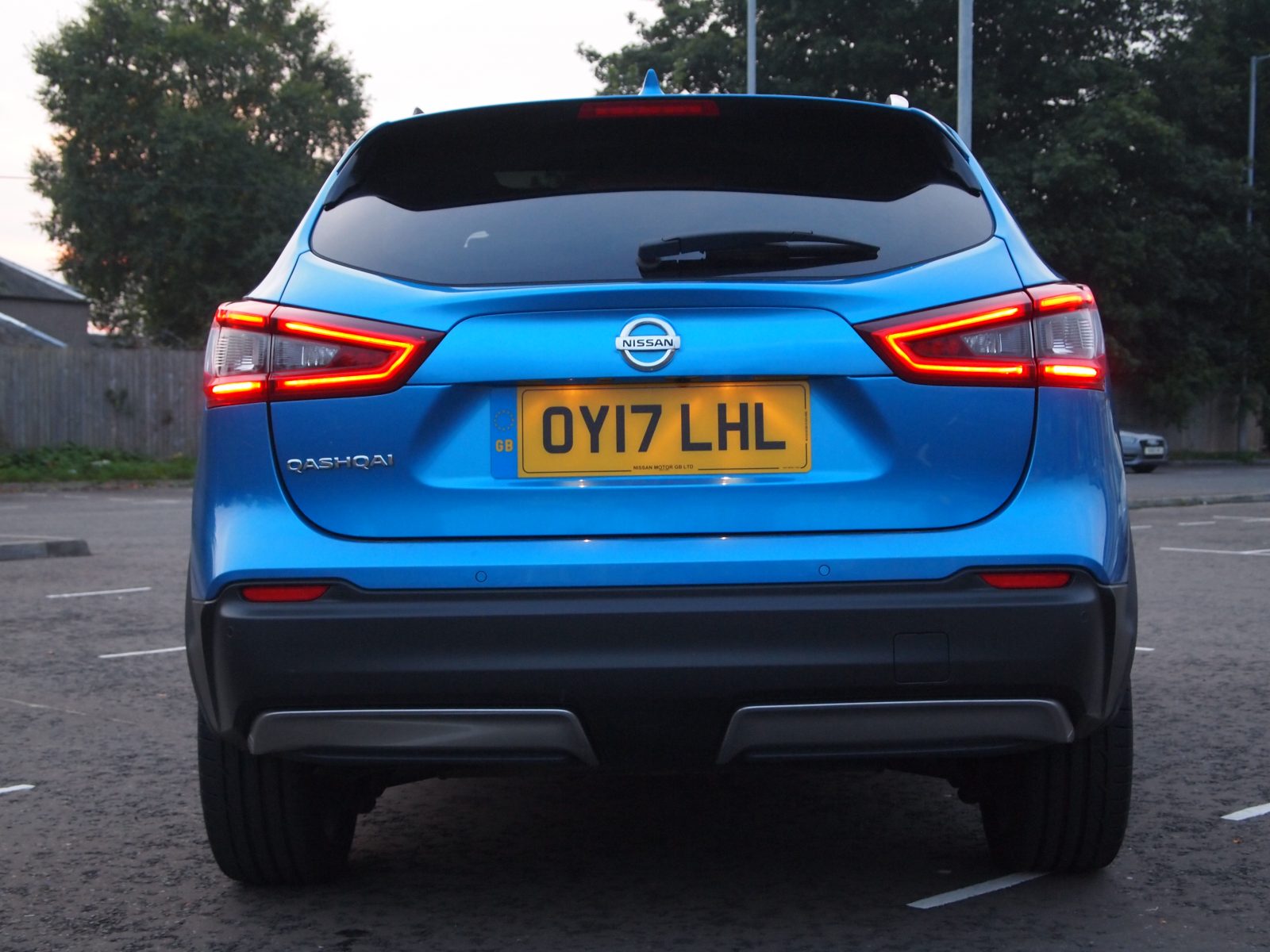
While it’s only recently that Nissan topped the UK sales charts with the Qashqai, this is an industry that’s moving faster than ever, and where innovations are quickly emulated and exceeded. What we needed to discover is whether Nissan has managed to keep developing how the car drives, how it looks and what it’s like to live with.
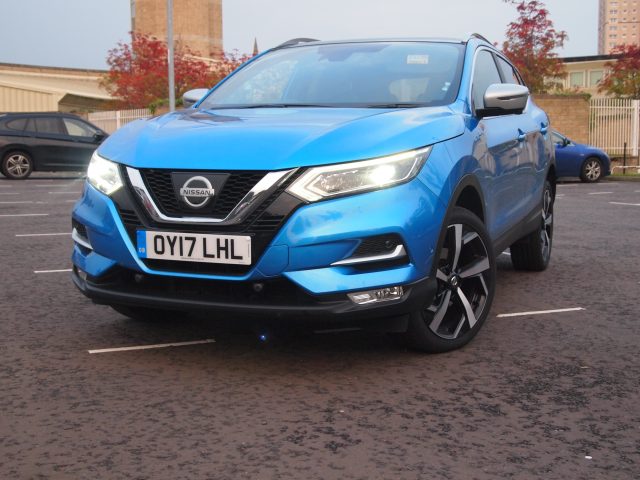
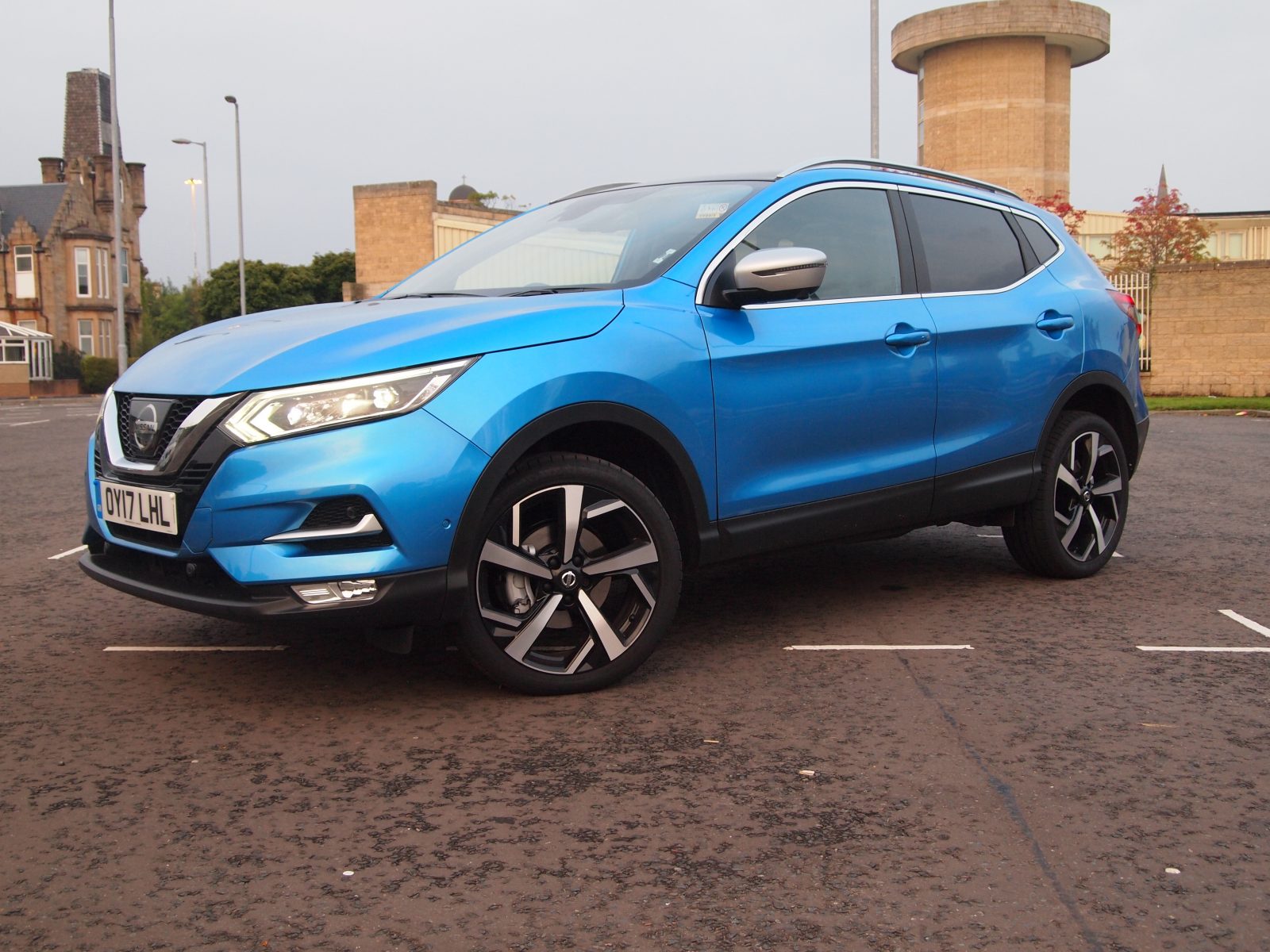
Starting with how it looks, since that’s the first impression that we get with a new vehicle – it has to be repeated just how big an improvement this is over previous versions. The original Qashqai looks very understyled in comparison, and ages quite dramatically when you park the new model next to it (I did this with our test car but didn’t manage to get a photo). The biggest upgrade is front end with the v-motion grill coupled with new LED signature daytime running lights.
Open the door and I was a real fan of the black Nappa leather seats with “3D quilting”. Nice looking seats can make or break an interior and these seats are up there with Qashqai’s more upmarket rivals.
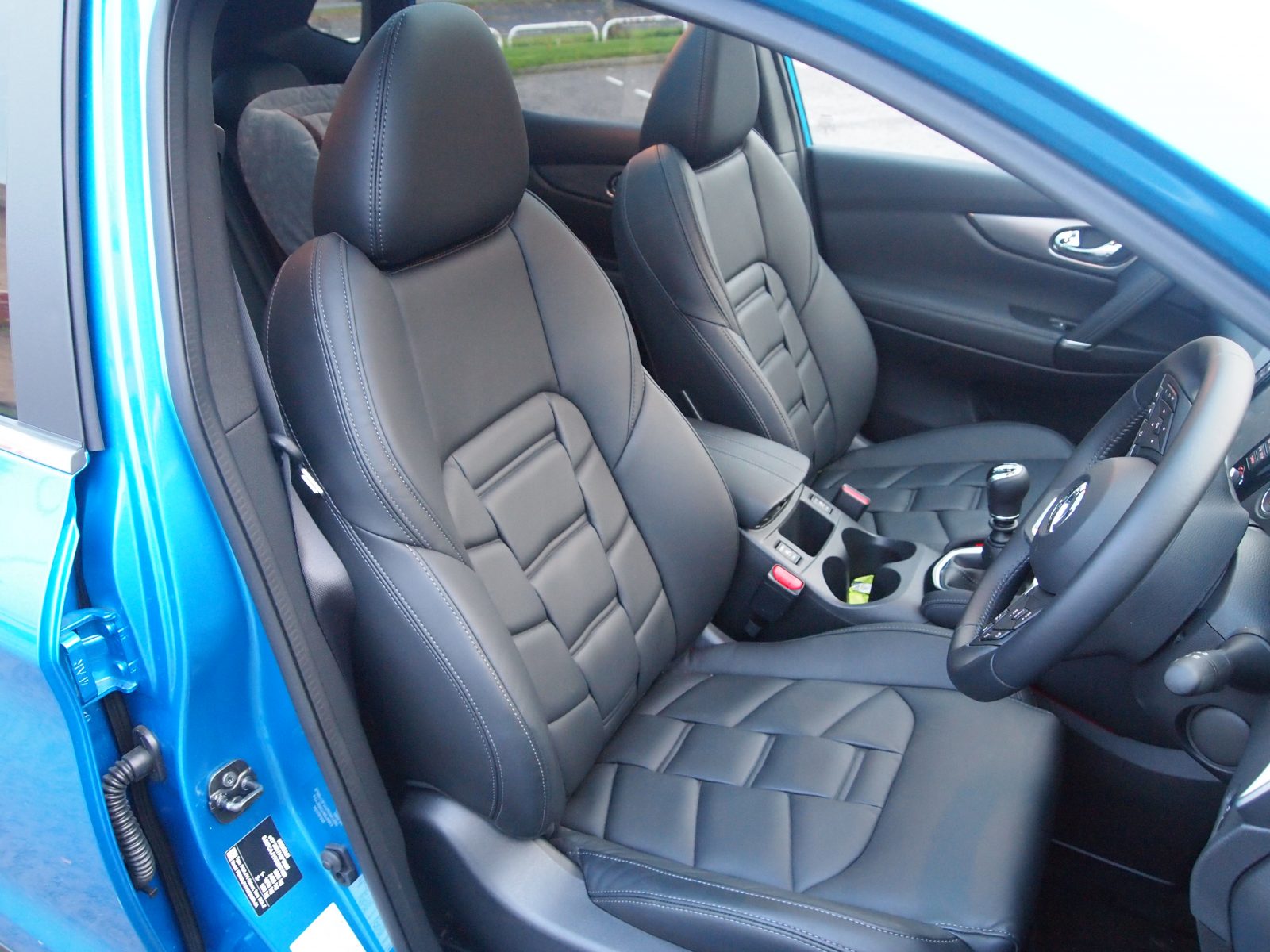
At this point, it’s worth mentioning that the car on test is the Tekna+, which is the top of the range model. This adds just over £10k to the Qashqai’s base price, making it £29,995 on the road. This might seem steep but the Tekna+ has EVERYTHING added to it, and nowhere is this more obvious than the interior.
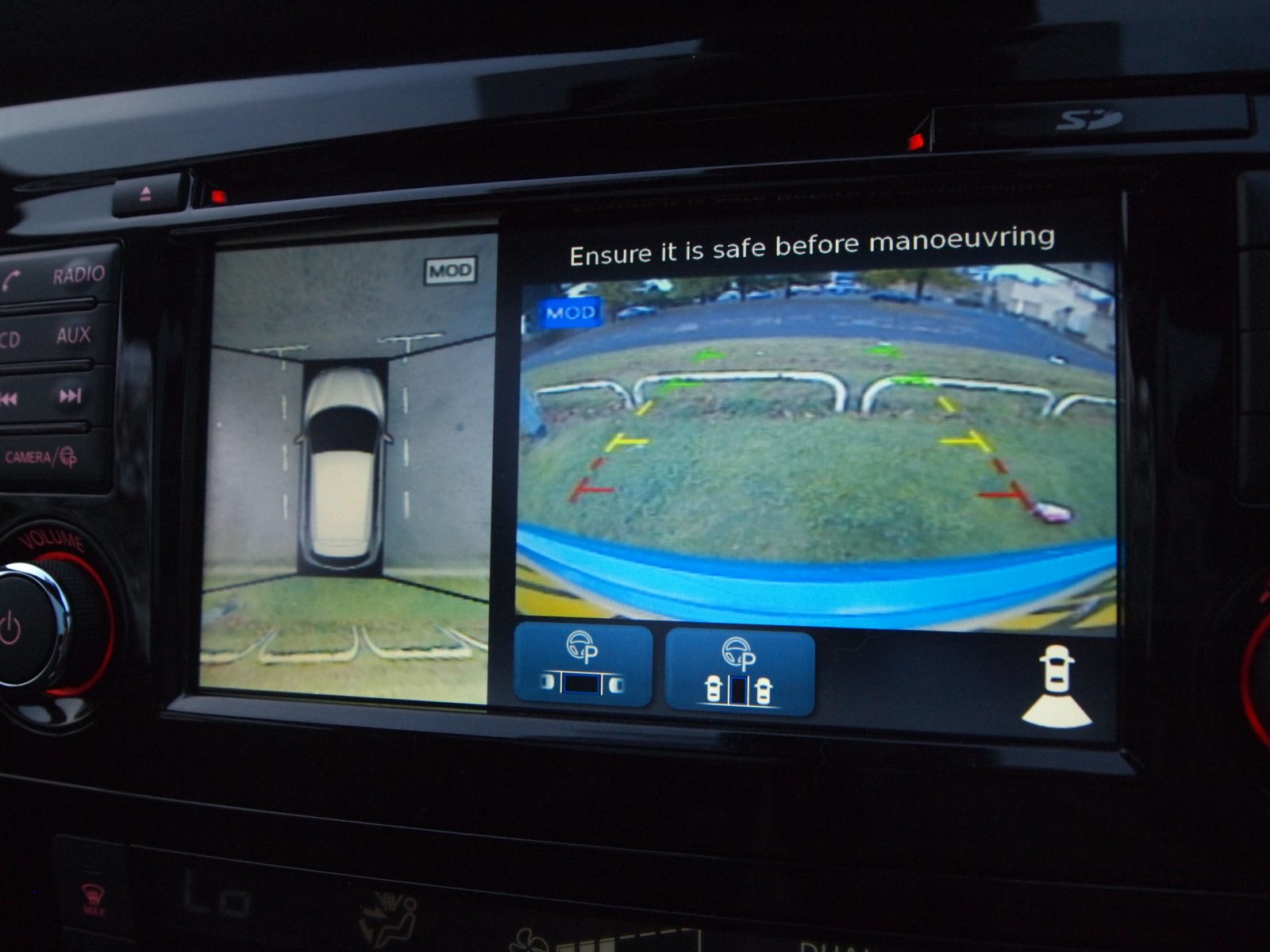
From the trim level below (Tekna) you’re already getting an 8 speaker Bose stereo with DAB and all the connectivity you need, plenty of intelligent safety systems (rear cross traffic alert, blind spot warning, intelligent driver alertness and intelligent park assist), and 19” diamond cut alloys. The “+” adds the aforementioned, full Nappa leather, memory seats with lumbar support and a panoramic roof. Combined, the Tekna+ is a nice place to spend time and feels just premium enough to keep them ahead of the competition from the Skoda Karoq.
This takes us on to driving the Qashqai and whether it endears us towards the medium-sized SUV market. While the 1.6 litre petrol is a pleasant change from the usual diesels you’ll find in this sector, being reasonably punchy, it’s not quite what you would call refined. I think a little bit more displacement would help but it still does a good job of hustling the Qashqai around once you get it in the power band.
While the Qashqai has been setup to be more sporty than the previous generation, it is still a tall car and quickly starts to understeer when pushed through the corners. What it does much better is navigating a town centre on an evening when you can actually flow between low-speed bends and roundabouts.
As a family car which will spend most of its time in urban areas, it’s easily a match for hatchbacks, while benefiting from better visibility. Where you’ll find a hatch/estate car better is when you regularly travel cross country or if you have young children and need the extra storage capacity of an estate.
During our custodianship of the Qashqai we took it on a family trip (two adults, one toddler and one baby) to the seaside. This proved that the interior was perfect for us and doubled as great picnic spot when the weather did what it does best on the west coast of Scotland. What we did miss though was the boot space of our family estate car, meaning we’d probably be better suited to the Qashqai’s big brother, the X-Trail.
Having spent some time with the Qashqai it’s clear why it’s such a big hit with UK car buyers. This latest version updates the look and adds enough kit to keep it ahead of the pack for the foreseeable future.
PRICE: £29,995
ENGINE: 1.6 litre DIG-T (petrol)
POWER: 163 PS
TORQUE: 240 Nm
PERFORMANCE: Top speed 124 mph, 0-62 mph 8.9 secs
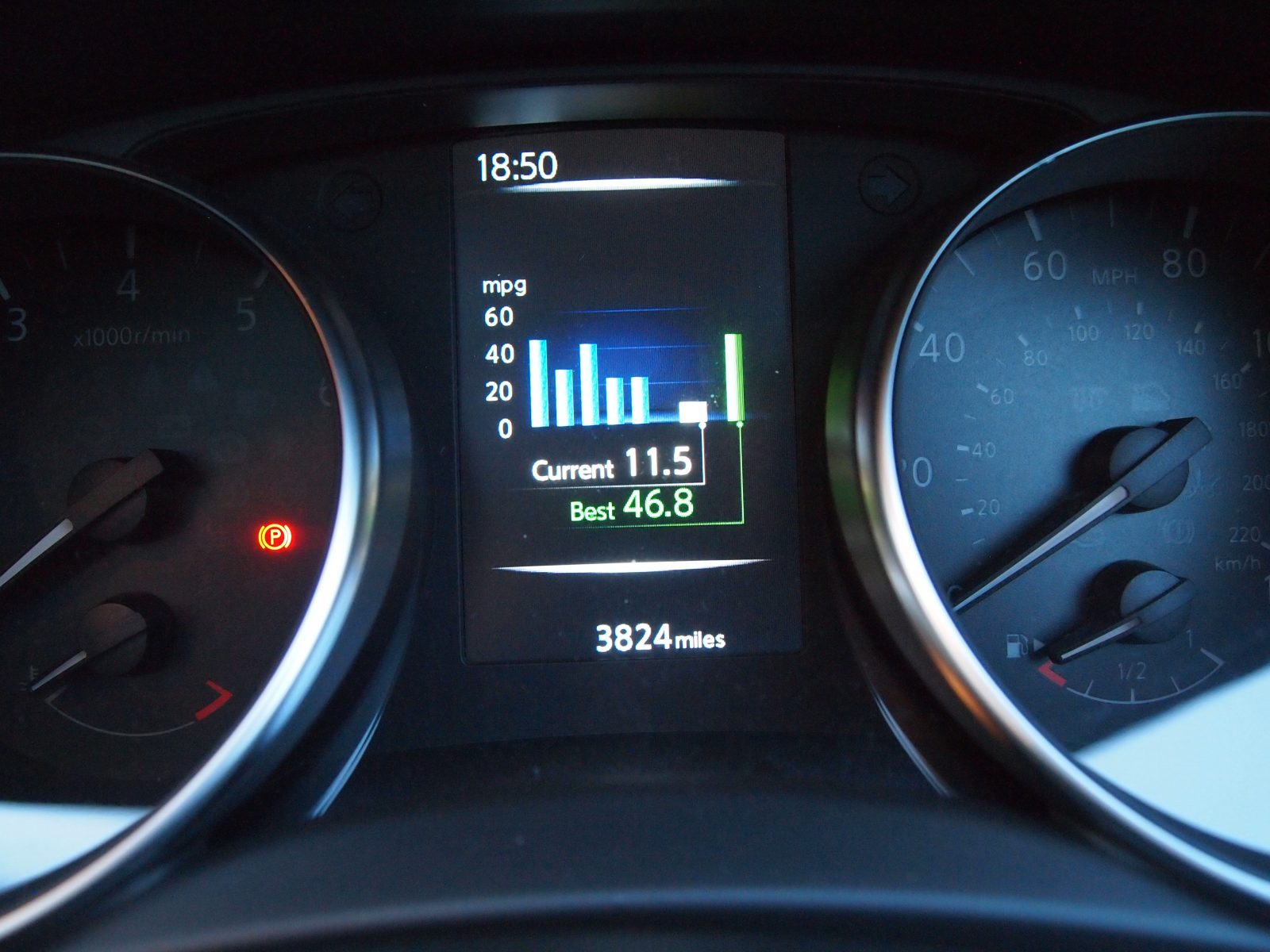
CONSUMPTION: 48.7 mpg (official combined)
CO2: 134 g/km
TT Rating: